Dental Emergencies Welcome | Welcoming New Patients

Our Office
10470 S. Progress Way
Suite 100
Parker, CO 80134
Existing Patients: 720-870-9500
New Patients: (720) 640-4406
Visit Us Online


Modern dental materials and laboratory techniques make replacing missing teeth more natural and reliable than ever. While fixed solutions such as implants and bridges are excellent options for many patients, removable dentures continue to provide a practical, adaptable choice for restoring a complete smile. Dentures have evolved — they are lighter, more lifelike, and designed to support both function and facial form.
Our practice creates dentures with careful attention to fit, appearance, and long-term comfort. Each prosthesis is crafted from durable materials and shaped to work in harmony with your remaining teeth and soft tissues, helping you speak clearly, enjoy meals, and feel confident when you smile. Plaza Dental Parker combines clinical expertise and modern technology to guide patients toward the best tooth-replacement option for their needs.
We approach denture care as a collaboration: we listen to your goals, examine your oral health, and design a plan that considers your lifestyle and preferences. Whether you're replacing a few teeth or all of them, the goal is the same — restore reliable function and a natural appearance while preserving oral health for the long term.
Losing teeth changes how your mouth works in ways that go beyond cosmetic concerns. Gaps can alter the way your teeth meet and how your jaw distributes biting forces, which over time may lead to drifting teeth, increased wear, or uneven pressure on remaining teeth. Those changes can complicate future restorative options and make everyday tasks like chewing and speaking more difficult.
There are also biological consequences to consider. When teeth are absent, the jawbone beneath them gradually remodels; this process can change facial contours and reduce the structural support for dentures and other restorations. Addressing missing teeth sooner helps limit these changes and provides more predictable outcomes when creating replacement teeth.
Beyond the physical effects, tooth loss can influence self-image and social interactions. Restoring a complete smile with an appropriately designed denture often improves comfort and confidence, making it easier to participate in social and professional activities without worrying about how you look or speak.
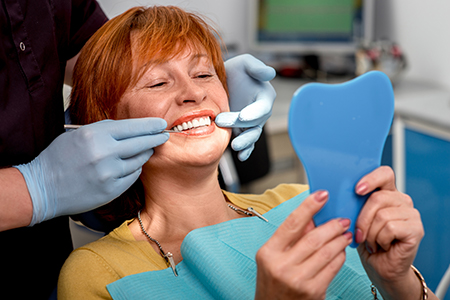
Removable dentures are prosthetic devices that replace missing teeth and the surrounding gum tissue. They sit on the gums and may be supported by the remaining teeth, dental implants, or simply by the contours of the jaw and the suction created with the palate (in upper dentures). Their primary role is to recreate the look and function of natural teeth while protecting oral tissues.
One of the key advantages of removable dentures is their versatility. Partial dentures can restore several missing teeth while preserving healthy natural teeth; complete (full) dentures replace an entire arch. Because they can be taken out for cleaning, removable dentures offer straightforward hygiene options for patients who prefer or require that approach.
Choosing dentures doesn’t mean settling for an unnatural result. Contemporary denture teeth and acrylics are designed to mimic natural tooth shape and shade, and careful attention to bite, lip support, and tooth placement creates an attractive, balanced smile. Your clinician will discuss how dentures compare to fixed alternatives and recommend the option that best suits your oral health and lifestyle.
Determining the appropriate denture starts with a thorough clinical evaluation. We consider how many teeth remain, the condition of those teeth, the shape of the jawbone, and your goals for comfort and appearance. That information guides the choice between a partial or complete denture and whether additional support — such as attachments or implants — would improve stability and function.
Complete dentures replace all teeth in an upper or lower arch, and their design varies depending on whether teeth were removed weeks earlier or recently extracted. Partial dentures fill in gaps between remaining teeth and help preserve the position of natural teeth while restoring chewing ability and speech. Both types are tailored to each patient’s oral anatomy and cosmetic preferences.
For many patients, combining removable prostheses with other treatments offers the best long-term result. For example, securing an overdenture to natural tooth roots or to implants can greatly improve retention and comfort. Your dental team will explain the trade-offs and benefits so you can make an informed choice about the format that will serve you best.
Immediate denture
An immediate denture is placed at the time of extraction so you do not go without teeth during healing. It provides immediate aesthetics and function, but as the gums and bone remodel after extractions, the denture often requires adjustments and may need a reline or replacement to maintain optimal fit.
Overdenture
An overdenture gains extra retention by attaching to preserved tooth roots or specially placed attachments. This approach preserves bone and improves stability while remaining removable for hygiene.
Implant-supported denture
An implant-supported denture connects to several dental implants that are placed in the jaw. Those implants act as solid anchors, greatly improving chewing ability and reducing movement compared with traditional dentures.
Partial dentures come in a variety of frameworks and materials. Traditional designs use discreet metal frameworks for strength, while newer options include flexible resins and hybrid materials that can offer lighter weight and improved comfort for some patients. The choice depends on the location and number of missing teeth and on your personal preferences.
A well-designed partial denture not only fills visible gaps, it also stabilizes your bite and prevents neighboring teeth from shifting into empty spaces. Maintaining the health of remaining teeth is essential; we evaluate each potential abutment tooth to ensure it can reliably support clasps or precision attachments.
Your clinician will review the available materials and attachment types and recommend a practical, durable solution tailored to your situation and oral habits.
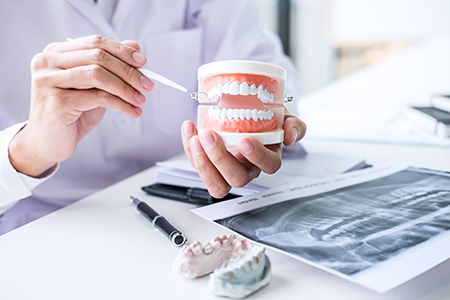
Designing a successful denture begins with a comprehensive assessment. We review your medical and dental history, evaluate the condition of remaining teeth and gums, and often use diagnostic imaging to examine bone structure. These steps help identify any preparatory work that will improve comfort and longevity — for example, treating periodontal disease or performing minor reshaping of oral tissues.
Precision impressions, careful tooth selection, and multiple try-in appointments are part of the process. These steps ensure that tooth shape, color, and position complement your facial features and that your bite feels natural. Skilled laboratory communication is essential, and our team works closely with technicians to fine-tune aesthetic and functional details.
When appropriate, we integrate other treatments — such as strategic implant placement — to enhance denture retention and chewing function. Whether the final appliance is a full conventional denture, an overdenture, or a partial, the objective is the same: deliver a comfortable, stable prosthesis that restores daily function and supports a lasting, natural-looking smile. Plaza Dental Parker combines thoughtful planning and modern materials to achieve predictable, patient-focused results.

Adjusting to a new denture takes a short period of acclimation. It’s common to experience increased saliva production initially and to notice subtle changes in speech and chewing as your mouth adapts. Regular follow-up visits allow us to identify pressure points, refine the fit, and make small adjustments so the denture becomes comfortable and reliable.
Easing into daily use
Start by wearing your denture for short periods and gradually extend the time as comfort improves. Reading aloud or practicing conversation can speed up familiarization with speaking, and beginning with soft foods helps rebuild chewing confidence.
Hygiene and maintenance
Cleaning your denture daily prevents buildup of plaque and staining. Rinse the appliance after meals, brush it gently with a brush made for dentures, and soak it overnight to keep it hydrated. Continue to care for any remaining natural teeth and the soft tissues of your mouth with regular brushing and examination.
When adjustments are needed
Minor sore spots and looseness are common during the first few weeks and are easily addressed at adjustment appointments. If your denture feels unstable later on, a reline or additional retention (such as attachments or implant support) may be recommended to restore comfort and function.
Ongoing oral health checks
Routine dental visits allow us to monitor the fit and condition of your denture and assess the health of your gums and any remaining teeth. Periodic examinations help detect changes in tissue or bone that may affect fit and guide timely maintenance or modifications.
In summary, dentures remain a reliable and adaptable option for restoring missing teeth. With careful planning, precise fabrication, and attentive follow-up care, a well-made denture can restore function and confidence. If you have questions about whether a denture or a denture-supported solution is right for you, please contact us for more information.

Removable dentures generally fall into two main categories: partial dentures that replace several missing teeth and complete dentures that restore an entire upper or lower arch. Partial dentures can be made with metal frameworks, flexible resin, or hybrid materials and are designed to fit around remaining natural teeth. Complete dentures may be conventional, immediate, or constructed to attach to implants depending on clinical needs and timing relative to extractions.
There are also specialized variations such as overdentures that fit over preserved tooth roots or implant-supported dentures that anchor to dental implants for increased stability. Each type balances aesthetics, function, and maintenance requirements differently, so clinicians evaluate oral anatomy, remaining teeth, and patient goals when recommending an option. Understanding these categories helps patients choose an approach that best supports chewing, speech, and facial form.
Determining whether dentures are appropriate begins with a comprehensive dental exam that reviews the condition of remaining teeth, gum health, and jawbone structure. Dentures are a practical choice when multiple teeth are missing or when preserving remaining teeth for support is no longer feasible, but they are also considered alongside fixed alternatives such as bridges and implant restorations. Your clinician will discuss how each option affects function, appearance, and future oral health so you can make an informed decision.
Factors that influence the recommendation include systemic health, oral hygiene ability, and personal preferences for removability and maintenance. For some patients, combining dentures with implants or preserving strategic tooth roots for an overdenture improves retention and long-term outcomes. A clear treatment plan that addresses preparatory needs, such as periodontal therapy or extractions, ensures the chosen solution is predictable and comfortable.
The denture process typically begins with a detailed consultation, medical and dental history review, and diagnostic imaging to assess bone and soft tissue. The clinical sequence often includes preparatory treatments, such as treating decay or gum disease and performing extractions when necessary, followed by impressions and bite records to capture anatomical relationships accurately. Multiple try-in visits and careful laboratory communication allow adjustments to tooth position, shade, and occlusion before the final prosthesis is completed.
If extractions are involved, immediate dentures can provide teeth during healing but usually require relining as tissues remodel, while conventional dentures are made after healing for a more stable initial fit. When implants are planned to support a denture, the timeline extends to include surgical placement and osseointegration before attachment. Throughout the process, your dental team monitors healing and fit to ensure the finished denture supports comfortable function and a natural appearance.
Daily denture care starts with gentle cleaning to remove food debris and plaque; rinse the denture after eating and brush it daily with a soft brush and nonabrasive cleanser designed for prostheses. Avoid using regular toothpaste, which can be abrasive, and never use boiling water that could warp acrylic materials. When not wearing the denture, keep it moist by soaking it overnight in plain water or a manufacturer-recommended soaking solution to preserve shape and material integrity.
It is also important to continue caring for any remaining natural teeth and gum tissues with regular brushing, flossing, and professional cleanings. Inspect dentures periodically for chips, cracks, or loose teeth and bring them to your dental provider if you notice changes in fit or comfort. Routine dental visits allow the team to evaluate tissue health, perform professional maintenance, and recommend relines or adjustments when necessary.
Adjustment to new dentures varies by individual but commonly takes several weeks to a few months as muscles and soft tissues adapt to the appliance. During the initial period you may notice increased saliva production, minor soreness, and changes in speech or chewing, which typically improve with practice and gradual wear. Starting with softer foods, practicing speaking aloud, and following wear-time recommendations helps speed acclimation and reduce discomfort.
Follow-up appointments are an essential part of the adjustment phase to identify pressure points and make necessary refinements to the fit. Many early issues are addressed with simple adjustments or relines, while long-term stability can be improved through options like attachments or implant support if indicated. Ongoing communication with your dental team ensures that functional concerns are resolved promptly for a comfortable outcome.
Implant-supported dentures offer significantly improved retention and stability because they are anchored to dental implants placed in the jawbone, which reduces movement during eating and speaking. This anchorage restores more efficient chewing function and often improves patient confidence and comfort, especially for lower dentures that can be prone to instability. Implant-supported options also help preserve jawbone by transmitting functional forces to the bone, which can slow the resorption that typically follows tooth loss.
While implant-supported solutions require surgical planning and a healing period, they can provide long-term advantages in function and fit compared with traditional tissue-supported dentures. The number and arrangement of implants depend on the arch and prosthesis design, and clinicians will review the surgical and restorative sequence to align expectations and outcomes. For many patients, the enhanced performance of an implant-retained denture makes it a worthwhile adjunct to removable prosthetics.
Partial dentures are designed not only to replace missing teeth but also to stabilize the dental arch and prevent neighboring teeth from drifting into empty spaces. By maintaining proper tooth alignment and occlusion, a well-designed partial denture reduces abnormal wear and helps preserve chewing efficiency. The prosthesis can distribute biting forces more evenly across the arch, lessening undue stress on individual teeth that could otherwise accelerate damage or loss.
Successful partial denture design depends on careful evaluation of potential abutment teeth to ensure they can reliably support clasps or precision attachments. Proper oral hygiene and regular checkups are essential to monitor abutment health and to detect early signs of decay or periodontal issues. When remaining teeth are well maintained and the prosthesis is properly fitted, a partial denture can be a conservative, functional solution for restoring missing teeth.
Dentures should be evaluated regularly because changes in the underlying gums and jawbone can alter fit over time, leading to looseness or sore spots that warrant a reline or adjustment. A reline restores the tissue side of the denture to fit current oral contours and can often be completed without replacing the entire prosthesis. Repairs are indicated for fractures, broken teeth, or damaged clasps and should be performed promptly to prevent further problems and maintain function.
Complete replacement may be necessary when the denture is extensively worn, when repeated repairs no longer restore reliable function, or when significant anatomical changes make a new fabrication the best option. Routine dental visits help identify when maintenance is sufficient and when a remake will provide a more predictable, comfortable result. Timely attention to fit and condition helps preserve oral health and the longevity of the prosthesis.
Dentures can influence speech and chewing patterns because the tongue, lips, and muscles must adapt to new contours and tooth positions; common early changes include slight lisping or difficulty with thin foods. Practicing reading aloud and repeating troublesome words can retrain speech muscles, while starting with soft, easily managed foods and gradually reintroducing firmer items helps rebuild chewing confidence. Small adjustments to the denture by your clinician can further refine occlusion and comfort to support clearer speech and more efficient mastication.
Proper denture fit and correct vertical dimension are critical to restoring normal function, and follow-up visits are a time to address specific concerns such as biting balance or sore areas that impair eating. In some cases, adding retention through attachments or implant support improves function markedly, particularly for lower dentures. Patience and close collaboration with your dental team generally produce steady improvement in both speech and eating ability.
At Plaza Dental Parker, denture care begins with a comprehensive assessment of oral health, diagnostic imaging, and careful treatment planning to address factors that affect fit, such as gum disease or the need for extractions. The clinical process includes precision impressions, bite records, and multiple try-in appointments so that tooth selection, position, and lip support are refined before the final prosthesis is fabricated. Communication with skilled dental laboratory technicians ensures the appliance reflects both functional and esthetic goals.
After delivery, the practice schedules follow-up visits to identify pressure points and make necessary adjustments, and it provides detailed home-care guidance to maintain the denture and oral tissues. When greater retention is desired, the team discusses overdenture or implant-supported options and coordinates care to optimize long-term stability. This patient-centered approach emphasizes predictable function, comfortable fit, and a natural appearance.