Dental Emergencies Welcome | Welcoming New Patients

Our Office
10470 S. Progress Way
Suite 100
Parker, CO 80134
Existing Patients: 720-870-9500
New Patients: (720) 640-4406
Visit Us Online


Wisdom teeth, commonly called third molars, are the last permanent teeth to form. They usually emerge between the late teens and mid-twenties and were helpful to our ancestors who needed extra chewing power. Today, however, many mouths no longer have enough room for these late arrivals. That mismatch between jaw size and tooth position is the main reason wisdom teeth attract attention from dentists and oral surgeons alike.
Not every wisdom tooth causes trouble. Some erupt fully, line up with the bite, and remain healthy for years. But when they grow in at an angle, stop partway through the gum, or remain completely buried under bone, they can create pressure, inflammation, or pathways for infection. Understanding how these teeth develop and how they behave helps you and your dental team decide whether monitoring or removal is the best course.
Because wisdom teeth can affect adjacent teeth, gums, and bone, they are considered more than a minor nuisance when symptoms appear. Early evaluation allows your provider to spot potential problems before they become painful or damaging. That proactive approach often leads to simpler treatment and faster recovery when intervention is needed.
When a wisdom tooth is impacted, it means the tooth cannot erupt fully into its intended position. There are patterns to these impactions: some are soft tissue impactions, where the tooth is covered by gum tissue; others are bony impactions, where the tooth is blocked by jawbone. A partially erupted tooth can be especially problematic because food and bacteria collect along the gum edge, increasing the risk of infection.
Common signs that a wisdom tooth may be causing trouble include persistent or intermittent pain, swelling around the back molars, difficulty opening the mouth comfortably, and a bad taste or odor from the area. Recurrent infections (often called pericoronitis), repeated decay on the adjacent second molar, and cyst formation in rare cases are additional reasons to investigate further.
Not all warning signs are dramatic. Sometimes a wisdom tooth simply affects alignment or subtly increases gum inflammation around nearby teeth. Regular dental exams and routine imaging can catch these subtle changes early, giving you and your clinician the information needed to choose the most appropriate path forward.
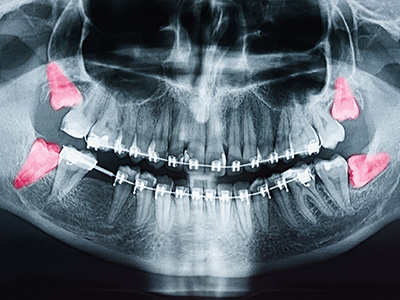
A careful assessment begins with a full review of your dental and medical history, followed by a clinical exam to assess mouth opening, gum health, and the relationship of the wisdom teeth to neighboring structures. Imaging is a key part of that evaluation: standard panoramic x-rays reveal tooth position and root shape, while three-dimensional imaging may be used for complex cases to map nerve paths and bone anatomy precisely.
Diagnostic imaging helps the dental team determine whether a wisdom tooth is likely to erupt properly or whether it poses a risk to adjacent teeth or oral tissues. The goal is to create a clear, evidence-based plan—whether that means watchful waiting with periodic monitoring or scheduling a removal to prevent future complications. When a referral to an oral surgeon is appropriate, we coordinate care so the process is smooth and well explained.
At Plaza Dental Parker, we prioritize communication and individualized care. We review each option with patients, explaining the expected benefits and the most common risks in straightforward terms. That transparency helps you make an informed decision based on your comfort level, overall health, and life circumstances.
Wisdom tooth removal ranges from a simple extraction to a minor surgical procedure. A fully erupted, accessible tooth is often removed in a straightforward manner, while a deeply impacted tooth may require small incisions and removal of some bone. Regardless of complexity, the procedure is performed under appropriate anesthesia to keep you comfortable throughout.
Many practices offer a range of sedation options for anxious or complex cases; these help manage discomfort and allow the surgical team to work efficiently and safely. Local anesthesia numbs the site, and additional sedation can be arranged when indicated. Your dental team will review pre-procedure instructions and any medical factors that influence sedation choices so that your safety is the top priority.
During the procedure, care is taken to protect the surrounding teeth, nerves, and sinus areas. If needed, sutures are placed to support healing. Before you leave, the clinician will explain immediate post-procedure steps, set expectations for pain and swelling, and provide guidance on medications and activity restrictions tailored to your situation.
Recovery after wisdom tooth removal varies by the procedure’s complexity and individual healing rates, but most people experience the most intense symptoms during the first 48–72 hours. Swelling, a degree of discomfort, and minor bleeding are common and usually manageable with rest, elevation, and any prescribed medications. Cold packs applied intermittently during the first day and a soft-food diet for several days often make the early recovery period more comfortable.
Good post-operative care supports faster healing: gentle oral hygiene around the site, avoiding smoking or vigorous rinsing for the first 24–48 hours, and following any activity restrictions recommended by your clinician. If antibiotics or pain medications are prescribed, take them exactly as directed. Most patients return to normal daily activities within a few days to a week, though complete tissue healing continues beyond that.
Know when to contact your dental team: increasing or uncontrolled pain, fever, excessive bleeding, persistent numbness, or signs of a spreading infection are reasons to seek prompt attention. Scheduled follow-up appointments allow the clinician to confirm healing, remove any sutures if needed, and answer questions about oral care as the site matures.
Wisdom teeth are a common source of uncertainty, but with methodical evaluation and clear communication you can choose a plan that minimizes risk and maximizes comfort. Whether a wisdom tooth can remain under observation or should be removed, the decision should be based on current symptoms, imaging findings, and your overall oral health priorities.
If you would like to learn more about wisdom teeth and your options, please contact Plaza Dental Parker for a consultation. Our team can explain the evaluation process, discuss sedation choices when appropriate, and help you understand what to expect before, during, and after treatment.
Wisdom teeth, also known as third molars, are the last permanent teeth to develop and typically appear in the late teens through the mid-20s. Evolutionary changes in jaw size have made it common for these teeth to erupt in cramped or misaligned positions. When there is insufficient space, wisdom teeth can push against neighboring teeth, alter bite alignment, or create pockets where bacteria accumulate.
Not every wisdom tooth requires removal; some erupt fully and function normally for years. Problems arise when a tooth is angled, partially erupted, or completely trapped under bone, increasing the risk of infection, decay on adjacent teeth, or cyst formation. Early evaluation helps determine whether monitoring or intervention is the safer path for long-term oral health.
An impacted wisdom tooth is one that cannot fully emerge into its expected position, and clinicians identify impaction through a combination of clinical exam and imaging. During the exam, a dentist will check for swelling, gum coverage over the tooth, and signs of infection or damage to nearby teeth. Standard panoramic x-rays reveal tooth position and root anatomy, while three-dimensional imaging is reserved for complex cases that require more precise mapping of bone and nerve relationships.
Imaging also helps classify impactions as soft tissue or bony, and it shows the tooth's relationship to the mandibular nerve and sinus cavities. This information guides whether the tooth can be safely monitored or if removal is warranted to prevent future complications. A clear diagnosis reduces surprises and supports a more predictable treatment plan.
Common symptoms that signal a need for evaluation include persistent or intermittent pain behind the second molars, localized swelling, difficulty opening the mouth fully, and an unpleasant taste or odor near the area. Recurrent soft tissue infections, known as pericoronitis, often occur around partially erupted teeth when food and bacteria collect under the gum flap. Persistent decay on the adjacent second molar or unexplained changes in bite or alignment are also reasons to have a tooth examined.
Not all problems are dramatic; subtle gum inflammation or intermittent discomfort can precede more significant issues. Regular dental exams and routine x-rays are valuable because they catch these early warning signs before infection or structural damage develops. Timely evaluation allows clinicians to recommend monitoring or removal based on objective findings rather than avoidable symptoms.
Removal is generally recommended when a wisdom tooth shows signs of causing or likely to cause harm, such as recurrent infections, decay that cannot be adequately restored, damage to adjacent teeth, or evidence of cysts. Teeth that are deeply impacted and pressing on neighboring roots or nerves are often removed to prevent progressive damage. Removal may also be advised when tooth position threatens orthodontic results or when monitoring would risk more complex problems later.
The decision between removal and watchful waiting depends on symptoms, imaging findings, overall oral health, and patient factors such as age and medical history. At Plaza Dental Parker we review these factors with each patient to create an individualized plan that balances risk, benefit, and the patient’s comfort level. Shared decision-making helps ensure interventions are timely and appropriate.
Panoramic radiographs are the most common initial imaging tool because they show the position of all third molars, root morphology, and relationships to adjacent structures. When a case is complex—such as close proximity to the mandibular nerve or an unusual root anatomy—three-dimensional cone beam computed tomography (CBCT) provides precise detail about bone contours, nerve pathways, and sinus relationships. This higher-resolution view supports safer surgical planning and helps predict potential complications.
Imaging also aids in monitoring teeth that are observed rather than removed, allowing clinicians to detect changes over time that would prompt intervention. Clear imaging reduces uncertainty and enables the dental team to explain risks and expectations in concrete terms. Informed planning contributes to smoother procedures and more predictable recoveries.
Wisdom tooth extraction ranges from a simple removal for fully erupted teeth to a minor surgical procedure for impacted teeth that may require small incisions and removal of bone. The clinician will provide appropriate anesthesia to ensure you are comfortable, and additional sedation options can be arranged for anxious or complex cases. The surgical team takes steps to protect adjacent teeth, nerves, and sinus areas throughout the procedure.
After tooth removal the site may be sutured to support healing and control bleeding, and the clinician will review immediate post-operative care before you leave. Patients receive instructions on activity restrictions, oral hygiene precautions, and how to manage pain and swelling. Clear expectations about the procedure and early recovery help reduce anxiety and support a smoother healing process.
Common options include local anesthesia to numb the surgical site, nitrous oxide for mild sedation, oral sedatives for moderate relaxation, and intravenous sedation or general anesthesia for more extensive procedures or heightened anxiety. The choice of sedation is based on the complexity of the extraction, the patient’s medical history, and their comfort level with the recommended approach. Your dental team will review pre-procedure instructions and any health considerations that influence sedation planning.
Pain management typically combines prescription or over-the-counter medication with practical measures such as rest, elevation, and cold therapy during the first 24–48 hours. Patients are advised to follow dosing instructions and to communicate any concerns about medication or allergies before the procedure. Thoughtful pain-control planning reduces distress and supports a more comfortable recovery period.
Most patients experience the most intense pain and swelling during the first 48–72 hours after extraction, with gradual improvement thereafter; many return to normal activities within a few days to a week depending on the procedure’s complexity. Initial home care includes rest, intermittent cold packs for the first day, a soft-food diet, and gentle oral hygiene while avoiding vigorous rinsing for the first 24–48 hours. Smoking and strenuous exercise should be avoided because they can delay healing or increase the risk of complications.
Follow-up appointments allow the clinician to confirm healing and remove sutures if necessary, and continued gentle cleaning of the mouth supports tissue repair. Patients should take any prescribed antibiotics or pain medications exactly as directed and reach out if symptoms deviate from expected improvement. Proper aftercare helps minimize the chance of problems and supports a timely recovery.
Potential complications include infection, prolonged bleeding, dry socket (alveolar osteitis), and, in rare cases, altered sensation if a nerve is affected. Increasing or uncontrolled pain after the first few days, fever, persistent or heavy bleeding, spreading swelling, or prolonged numbness in the lip, chin, or tongue all warrant prompt contact with the dental team. Early recognition and treatment of complications reduce the likelihood of more serious issues.
If you notice unusual symptoms or are concerned about the course of your recovery, call your dental provider to describe the problem and receive guidance. Timely communication allows clinicians to assess the situation and schedule an evaluation if necessary. Quick intervention often leads to simpler, more effective management.
When a referral is appropriate, the dental team provides a comprehensive summary of the clinical findings and imaging to ensure continuity of care and clear communication between providers. We assist patients with scheduling and share relevant records so the oral surgeon has the information needed for safe, efficient planning. Coordination includes discussing sedation options, medical considerations, and what patients should expect before, during, and after the specialist visit.
Plaza Dental Parker works closely with trusted surgical colleagues to streamline care and keep patients informed throughout the process. Our goal is to reduce confusion and make transitions between the general dentist and oral surgeon as seamless as possible. Clear coordination supports better outcomes and a more reassuring experience for patients.